Are FAM Trips Tax Deductible for Travel Agents?
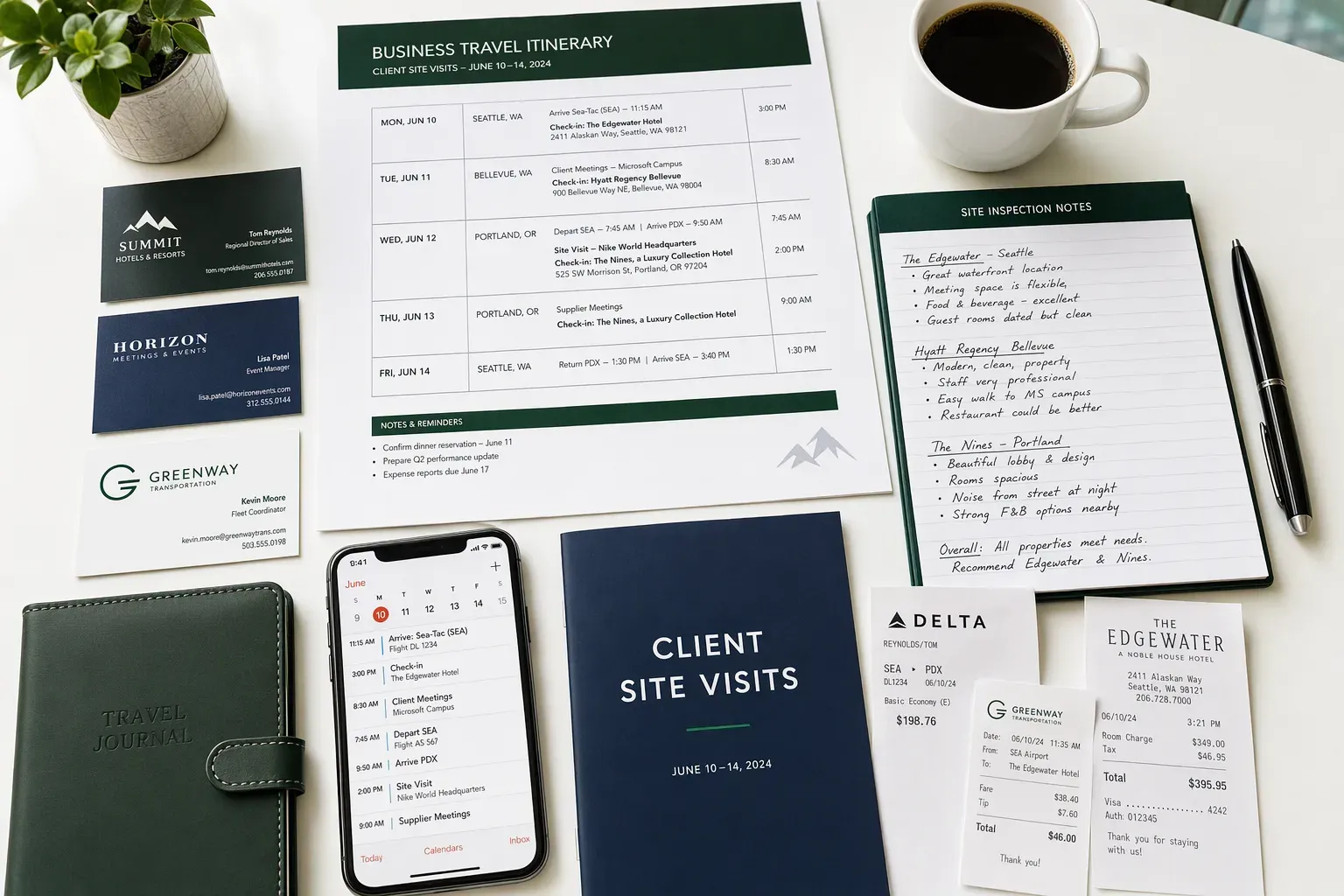
FAM trips are tax deductible for travel agents when the trip's primary purpose is business—evaluating destinations, properties, or suppliers to recommend to clients. If the trip is primarily for business, your transportation and business-day expenses (hotels, 50% of meals, ground transportation) are deductible. If it's primarily personal, only direct business expenses at the destination count, and your airfare isn't deductible. The IRS scrutinizes these trips closely and requires detailed documentation under Section 274(d): a full itinerary, records of properties you evaluated, meeting notes, and how each inspection relates to what you sell.
The primarily-for-business test
The IRS looks at the main reason you took the trip. If the trip's primary purpose is business, you can deduct your round-trip transportation and expenses for the days you spent on business activities. If it's primarily personal, your transportation isn't deductible, and you can only deduct expenses directly tied to business tasks while you're there.
Here's how the IRS judges "primary purpose":
Time spent on business vs personal activities: Count the days. If you're on a five-day trip and four days are spent touring properties, attending supplier meetings, and gathering information to sell trips—while one day is lounging by the pool—the trip is primarily business. If it's flipped—one business meeting and four vacation days—it's primarily personal.
The structure of the trip: Did a supplier, tour operator, or host agency organize the trip with a schedule of site inspections, networking events, and destination training? That points to business. Did you book your own flights and hotel, with no formal program, and add a "site visit" to a week of personal travel? The IRS is skeptical.
Your intent and documentation: If you arrived with a list of properties to evaluate, took notes, collected materials, and followed up with clients about what you learned, that's business. If you can't show what you inspected or how it ties to your work, the IRS treats it as vacation.
The rule is simpler when the trip is unquestionably business-focused—like a supplier-hosted fam with a packed schedule of hotel tours and meetings—or unquestionably personal—like a family vacation where you stopped by a resort lobby for ten minutes.
What the IRS wants you to document
Section 274(d) of the tax code requires contemporaneous records for travel expenses. For FAM trips, that means keeping detailed documentation as the trip happens, not reconstructing it later from memory.
Here's what to save:
A complete itinerary: The full schedule of where you went each day, who organized each activity, and what time you spent on business versus personal activities. If the supplier or tour operator provided an agenda, keep it. If you planned the trip yourself, write down the daily plan before or during the trip.
Properties and suppliers you evaluated: A list of every hotel, resort, tour operator, restaurant, or experience you inspected, with notes on each one. What did you see? What stood out? Which of your clients would it fit? What did you learn that helps you sell it?
Meeting notes and materials: If you met with hotel staff, local guides, destination management companies, or other travel professionals, keep notes on what you discussed. Save brochures, business cards, rate sheets, or other materials they gave you.
How it ties to your business: For each property or destination element you evaluated, note how it relates to what you sell. If you specialize in honeymoons, your notes should explain which properties work for couples. If you book family travel, what did you learn about kid-friendly options?
Receipts for expenses: Every hotel bill, meal receipt, ground transportation charge, and other cost, with a note about the business purpose. The IRS wants to see the amount, the date, the place, and what it was for.
The key word is "contemporaneous." That means recorded at or near the time the expense happens. Notes you write in your hotel room each evening count. A spreadsheet you fill out six months later when you're preparing your taxes doesn't.
Examples: what qualifies and what doesn't
Here are realistic scenarios, with how the IRS would likely view each one:
Scenario 1: Supplier-hosted cruise ship fam
A cruise line invites you to a four-night sailing to preview their new ship. The itinerary includes ship tours, meetings with onboard staff, meals with other travel agents and cruise line representatives, and presentations on booking tools and commission structures. You attend all scheduled activities. On the last afternoon, you have three hours of free time and sit by the pool.
IRS view: Primarily business. The trip was organized for a business purpose, the schedule was full of business activities, and you participated. Your cruise fare, ground transportation to and from the port, and 50% of meals not provided by the cruise line are deductible. The few hours of personal time don't change the trip's primary purpose.
Scenario 2: Self-planned resort inspection
You book a week at an all-inclusive resort in Cabo because you've been thinking about adding Mexico to your offerings. You spend one morning walking through the property, taking pictures, and asking the concierge a few questions. The rest of the week, you're at the beach with your family. You didn't contact the resort ahead of time to arrange a formal site visit, and you don't have an itinerary or notes beyond the photos.
IRS view: Primarily personal. The trip's main purpose was vacation. The brief property tour doesn't make the whole trip business travel. Your airfare and hotel aren't deductible. If you can prove the one morning was a genuine business activity—with notes, materials from the resort, and a record of which clients you later recommended it to—you might deduct a small portion of costs tied to that specific activity, but it's a tough argument without a formal inspection arrangement.
Scenario 3: Destination fam with a packed schedule
Your host agency organizes a five-day fam to Italy, visiting four hotels, two wineries, and a local tour company. Each day has a printed itinerary with site inspections from 9 AM to 5 PM. You take notes at each property, collect rate sheets, and ask questions about availability for your clients. On the third evening, you skip the group dinner and have a personal evening exploring the town.
IRS view: Primarily business. The trip was structured as business travel, the days were spent on business activities, and you documented what you learned. Your flight, hotels, ground transportation, and 50% of meals are deductible. The one evening you spent on personal activities doesn't flip the trip's primary purpose.
Scenario 4: Conference with extended vacation
You fly to Hawaii for a two-day travel industry conference. After the conference ends, you stay five more days to relax and sightsee. The conference had clear business value—sessions on marketing, sales strategies, and supplier updates—and you attended all of them.
IRS view: The first two days are business; the next five are personal. You can deduct the conference registration fee and 50% of meals during the conference. For your airfare and hotel, only the business portion is deductible. Because the personal days outnumber the business days, the IRS might look closely at whether the trip's main purpose was business or vacation. If you flew to Hawaii primarily for the conference and decided to extend your stay, the business-day expenses are deductible. If you planned a vacation and happened to attend a conference while there, the IRS sees it differently. Document your intent and business purpose clearly.
Proving business purpose for site inspections
The difference between a deductible FAM trip and a vacation called research is documentation that proves business intent. Here's how to build a record the IRS will accept:
Before the trip:
- Confirm your participation in writing if it's a supplier- or host-agency-organized fam. Save the invitation and any correspondence.
- If you're organizing the trip yourself, contact properties ahead of time to arrange site inspections. A confirmation email from the hotel's sales office goes a long way.
- Write down your business goals for the trip. What do you want to learn? Which clients or market segments will benefit?
During the trip:
- Take notes each day: what you saw, who you met, what you learned. A simple notebook or notes app works.
- Photograph properties, amenities, room types, and details your clients care about—not just scenery.
- Collect business materials: brochures, rate sheets, contact cards, menus, activity lists.
- Keep every receipt, and note the business purpose on it or in your records.
After the trip:
- Write a summary of what you learned and how you'll use it. Which clients are you recommending these properties to? What did you add to your website or marketing materials?
- Save any client bookings or inquiries that came from the trip. If you sell three trips to a resort you visited, that's proof the inspection had business value.
The IRS doesn't require a specific format, but the records need to show that the trip served a genuine business purpose and wasn't primarily personal.
The 50% meal deduction on qualifying trips
When you're on a qualifying business FAM trip, meals are deductible at 50%. This applies to:
- Meals you pay for yourself while traveling away from home on business
- Meals not provided by the supplier or tour operator (if the fam includes meals, those are covered by the sponsor and don't go on your return)
Say you're on a supplier-hosted fam where breakfast and lunch are included, but you're on your own for dinner. You spend $60 on dinner one night. You can deduct $30 (50% of $60).
If you extend the trip for personal days, meals on the personal days aren't deductible.
The 50% limit has applied for years and remains in effect for 2026. Keep the receipt and note who was present (if it's a business meal with a supplier representative or fellow agent, it's clearer; if you're eating alone, it still counts as a travel meal, but document that it was during the business portion of the trip).
Common mistakes travel agents make with FAM trip deductions
Mistake 1: Deducting a family vacation because you work in travel
Taking your spouse and kids on a resort trip and calling it a site inspection doesn't make it deductible. If your family comes along on a legitimate business fam, only your costs are deductible, not theirs—unless your spouse is a bona fide employee of your business and has a valid business reason to be there.
Mistake 2: Poor documentation
You take a supplier-hosted fam, attend all the activities, and have clear business purpose—but you don't save the itinerary, don't take notes, and don't keep receipts for out-of-pocket expenses. Six months later, you can't prove what the trip was or why it was business. Without documentation, the IRS can disallow the deduction.
Mistake 3: Mixing business and personal without separating them
You attend a three-day fam, then vacation for four days, and deduct the whole week. The personal days aren't deductible. Split the costs and only claim the business portion.
Mistake 4: Claiming transportation on a primarily-personal trip
You take a two-week vacation, spend one afternoon visiting a hotel, and deduct your airfare. Because the trip is primarily personal, your flight isn't deductible. Only expenses directly tied to that one business activity might be (and even then, it's a stretch without a formal site inspection arrangement).
Mistake 5: No follow-up or business use
You visit a destination, take the tour, collect the materials—and never sell a single trip there or mention it to clients. The IRS may question whether the trip truly served a business purpose if you can't show how you used what you learned.
Tracking FAM trips and expenses together
AgentWriteOff is designed to help independent travel agents organize trip records and expenses in one place, with AI-powered guidance on what documentation the IRS expects. You can log each FAM trip with its itinerary, properties evaluated, notes, and receipts, so everything's together when you need it for taxes. Learn more at agentwriteoff.com.
Work with your tax professional
This article explains general IRS rules for FAM trip deductions, but it's not tax advice for your specific situation. Every agent's business structure, trip details, and documentation differ. Work with a CPA, enrolled agent, or tax professional who understands self-employment and travel industry practices. They'll review your records, determine what's deductible in your case, and help you stay compliant. Keep detailed, contemporaneous records, clearly separate business from personal, and you'll have what you need.