Business Meal Deduction for Travel Agents: What You Can Write Off
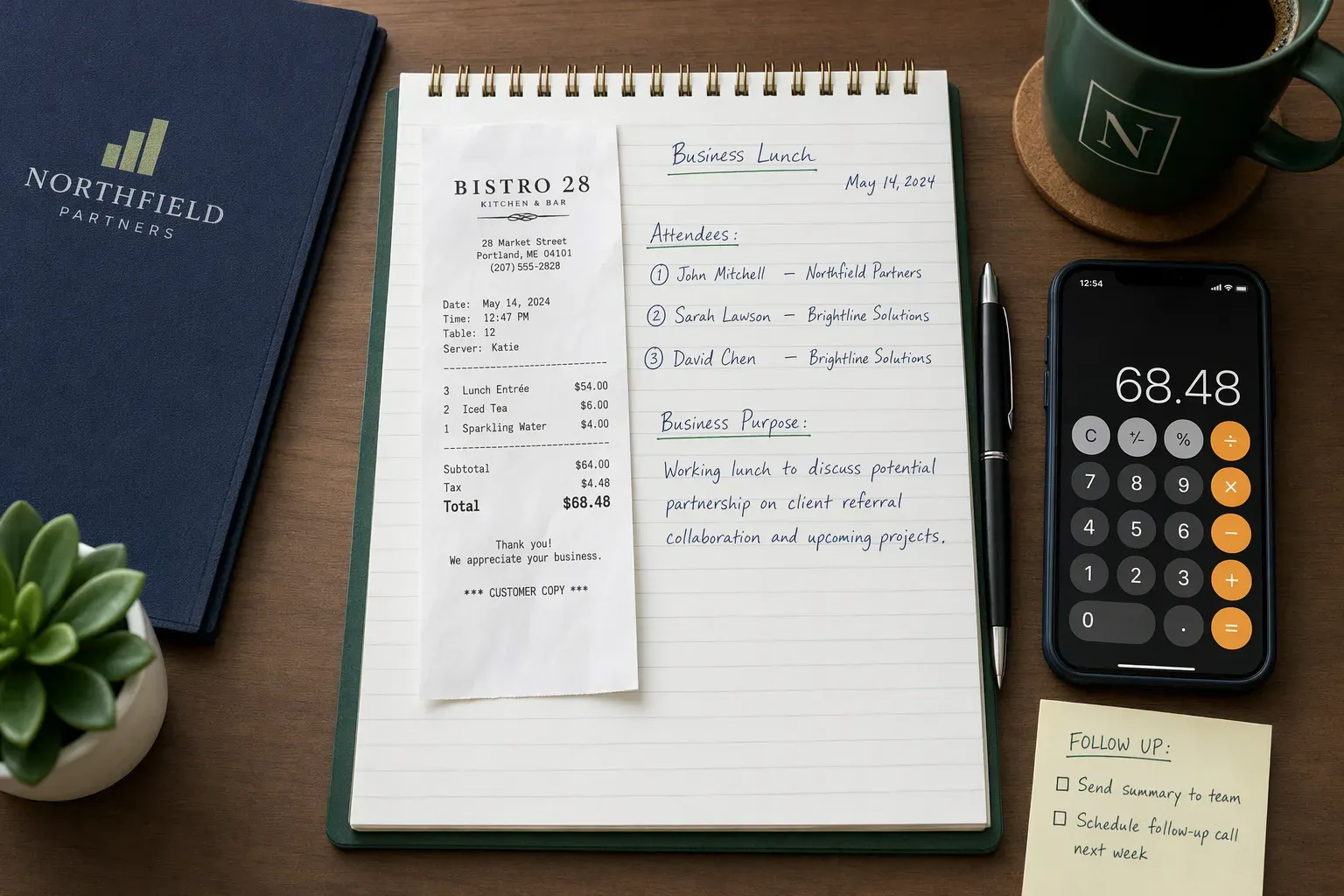
Independent travel agents meet clients, suppliers, and industry contacts for meals—often. When those meals involve business discussion, they're tax deductible at 50%. The IRS allows the deduction when the meal has a clear business purpose and you keep proper documentation: the date, location, who attended (with their business relationship), what you discussed, and how much you spent. Personal meals don't count, and neither do meals with friends or family where business never comes up. Here's what qualifies, what records to keep, and how to separate business meals from personal ones.
The 50% meal deduction rule
When you have a business meal, you can deduct 50% of the cost. That's been the standard limit for years, and it remains in effect for 2026. If you spend $80 on lunch with a client, you can deduct $40.
The 50% rule applies to:
Meals with clients, prospective clients, suppliers, or business contacts where you discuss business. That includes lunch with a client to plan an upcoming trip, dinner with a tour operator to review their new itineraries, coffee with a potential client you're trying to book, or a networking meal with other travel agents where you're sharing referrals and industry updates.
Meals while traveling away from home on business. When you're at a conference, on a FAM trip, or traveling for site inspections, the meals you buy are deductible at 50%—even if you're eating alone. These are travel expenses, and business travel meals follow the 50% rule.
Office meals that have a business purpose. If you work from home and order lunch for yourself during a normal workday, that's a personal expense. But if you host a client meeting at your home office and provide lunch, the meal is deductible at 50% because it's part of a business meeting.
The 50% limit is straightforward: add up your business meal expenses, divide by two, and that's your deduction.
What qualifies as a business meal
A meal is a business expense when its primary purpose is business—conducting a meeting, discussing a transaction, or building a relationship that serves your work. The IRS looks at the substance, not just the setting.
Here's what qualifies:
Meals with current clients: Lunch or dinner where you discuss an upcoming booking, review trip plans, go over destination options, or handle service issues. The meal doesn't have to result in a sale that day, but business should be part of the conversation.
Meals with prospective clients: Coffee, lunch, or dinner with someone you're hoping to book. You're meeting to introduce your services, learn about their travel interests, and explain how you work. Even if they don't book immediately, the purpose is business development.
Meals with suppliers, tour operators, and industry partners: Dinner with a hotel sales rep, lunch with a cruise line representative, or a meal with a destination management company where you're discussing rates, inventory, or new offerings. These meals help you serve your clients and grow your business.
Networking meals with other agents: Lunch with fellow travel agents where you share referrals, talk about industry trends, or discuss marketing strategies. As long as the conversation serves a business purpose, the meal is deductible.
Meals at conferences and industry events: When you're traveling for a conference, training session, or supplier event, the meals you buy are part of your business travel—deductible at 50%. This applies whether you're eating alone or with other attendees.
The IRS doesn't require a formal agenda or a sale to result from the meal. It looks for a clear connection between the meal and your business.
What doesn't qualify
Personal meals aren't business expenses, even if you work in a food-adjacent industry like travel where hospitality matters.
Here's what doesn't count:
Meals alone at home: Your regular breakfast, lunch, or dinner when you're working from your home office isn't a business expense. It's a personal cost of living. The fact that you're self-employed doesn't turn your grocery bill into a deduction.
Meals with family or friends where business doesn't come up: Dinner with your spouse or a friend who happens to work in a related field isn't deductible unless you genuinely discuss business and can document it. Social meals are personal, even if the other person knows what you do for work.
Lavish or extravagant meals: The IRS disallows meals that are unreasonably expensive given the circumstances. There's no fixed dollar limit, but a $500 dinner for two people when you're discussing a routine booking will raise questions. Keep spending reasonable relative to the business purpose.
Entertainment expenses: Under current tax law, entertainment isn't deductible—even if it's business-related. If you take a client to a concert or a sporting event, the tickets aren't deductible. The meal before or after might be, if you discuss business, but the entertainment itself isn't. This changed in 2018, and the rule is still in effect.
Meals with no documentation: If you can't show who was there, what the business purpose was, and how much you spent, the IRS will disallow the deduction. Good intentions don't count without records.
The line is simpler than it sounds: if the meal's purpose is business, and you can document it, it qualifies. If it's personal or social, it doesn't.
Required documentation for meal deductions
The IRS wants specific records for every business meal you deduct. Section 274(d) of the tax code sets the standard: adequate records or sufficient evidence to support each expense.
Here's what to keep:
The receipt: Save the actual receipt (paper or digital) showing the restaurant name, date, and total amount. A credit card statement isn't enough by itself; you need the itemized receipt.
The date and location: The receipt usually has this, but if you're noting the expense in a log or app, write down when and where the meal happened.
Who attended: The names of everyone at the meal and their relationship to your business. "Lunch with Sarah Chen, prospective cruise client" or "Dinner with Mark Torres, hotel sales manager, Hilton Cabo." If you're eating alone while traveling on business, note that: "Dinner alone during ASTA conference in Orlando."
The business purpose: What did you discuss? This doesn't need to be a transcript, but it should be specific enough to show the meal served a business purpose. "Discussed upcoming Hawaii honeymoon booking, reviewed resort options and airfare" is enough. "Client meeting" is vague. "Catch-up over lunch" looks personal.
The amount: The total cost, including tax and tip. When you calculate your deduction, you'll take 50% of the full amount.
You can keep these records in a notebook, a spreadsheet, a receipt-scanning app, or software like AgentWriteOff that's designed to organize business expenses with the documentation the IRS expects. The format doesn't matter as long as the information is there.
The word "contemporaneous" comes up in IRS guidance: you're supposed to record the details at or near the time the expense happens, not months later when you're preparing your taxes. Make a habit of noting the attendees and business purpose on the receipt or in your log the same day.
Meals while traveling for business
When you're away from home overnight on business—attending a conference, taking a FAM trip, or visiting clients—your meals are deductible at 50%, even when you eat alone.
This covers:
Conference and event meals: When you're at an industry conference, training session, or supplier event and meals aren't provided, the meals you buy are business travel expenses. Breakfast at the hotel before the first session, lunch between workshops, and dinner after the closing keynote all count.
Meals on FAM trips: If the FAM trip is primarily for business (site inspections, supplier meetings, destination evaluation), your meals are deductible at 50%. If the supplier or tour operator provides meals, those are covered and don't go on your tax return. If you're on your own for some meals, keep the receipts.
Meals during client visits or site inspections: If you're traveling to meet clients, tour properties, or conduct other business away from your tax home, the meals you eat during the trip are deductible.
The key is "away from home overnight on business." A quick lunch while running errands in your own city isn't a travel meal. A meal during a three-day conference in another city is.
For travel meals where you're eating alone, you still need to keep the receipt and note the business purpose: "Dinner during XYZ conference" or "Lunch on day two of Cabo site inspection." The documentation standard is the same.
Common questions about meal deductions
Can I deduct the full cost of a business meal, or is it always 50%?
For independent travel agents, it's almost always 50%. There are exceptions for employers providing meals to employees under specific conditions, and for certain workers subject to Department of Transportation hours-of-service limits, but those don't apply to most self-employed agents. Plan on 50%.
What if the meal is at a conference I already paid for—do I deduct it twice?
No. If the conference registration fee includes meals, those meals are part of the conference cost, and you deduct the registration fee (usually 100% deductible as an education or business expense). You don't separately deduct the meals at 50%. Only deduct meals you paid for out of pocket.
Can I deduct a meal with my spouse if we discuss business?
Only if your spouse is a legitimate employee of your travel business or has a bona fide business reason to attend. If your spouse works in your business and you're meeting a client together, their meal can be part of the deduction. If you're just having dinner and happen to mention work, it's a personal meal.
Does the meal have to result in a sale or a contract?
No. The IRS doesn't require a successful outcome. The purpose has to be business—meeting a prospective client, discussing a supplier partnership, networking with other agents—but the meal is deductible even if no sale or deal follows.
What about coffee or drinks without a full meal?
Coffee, drinks, and snacks with a business contact follow the same rules. If you meet a client for coffee to discuss an upcoming trip, the coffee is a business meal, deductible at 50%. Keep the receipt and document the business purpose.
The "not lavish or extravagant" standard
The tax code says business meals must be "not lavish or extravagant under the circumstances." That's intentionally subjective. There's no fixed dollar limit, and the IRS doesn't publish a price list.
What it means in practice:
Reasonable for the situation: A $200 dinner for two when you're hosting a high-value client or closing a major group booking is defensible. A $200 lunch to discuss a $300 cruise booking looks excessive. The cost should make sense relative to the business purpose and your income level.
Typical for your location and industry: Dinner in Manhattan costs more than dinner in a small Midwestern town. A meal with a luxury travel client might be more expensive than one with a budget traveler. The IRS expects context.
Not a personal indulgence dressed up as business: If you take a client to a Michelin-starred restaurant and spend lavishly because you wanted the experience, not because it served a business purpose, that's the kind of expense the IRS might question.
Most agents won't hit this limit. A $50 lunch, a $100 dinner, even a $150 meal for a business occasion—these are ordinary and reasonable. The rule is there to prevent abuse, not to second-guess every restaurant choice.
If you're ever uncertain, ask yourself: would I spend this much on a meal if I weren't deducting it, and does the cost match the business value of the meeting? If the answer to both is yes, you're fine.
Tracking meals and expenses together
AgentWriteOff helps independent travel agents organize business expenses, including meal receipts, with AI-powered guidance on what documentation the IRS expects. You can log each meal with the attendees, business purpose, and receipt, so everything's ready when tax season arrives. Learn more at agentwriteoff.com.
Work with your tax professional
This article explains general IRS rules for business meal deductions, but it's not tax advice for your specific situation. Every agent's business structure and expense patterns differ. Work with a CPA, enrolled agent, or tax professional who understands self-employment. They'll review your records, determine what's deductible in your case, and help you stay compliant. Keep good records, document the business purpose, and you'll have what you need.