How to Track Business Miles as a Travel Agent
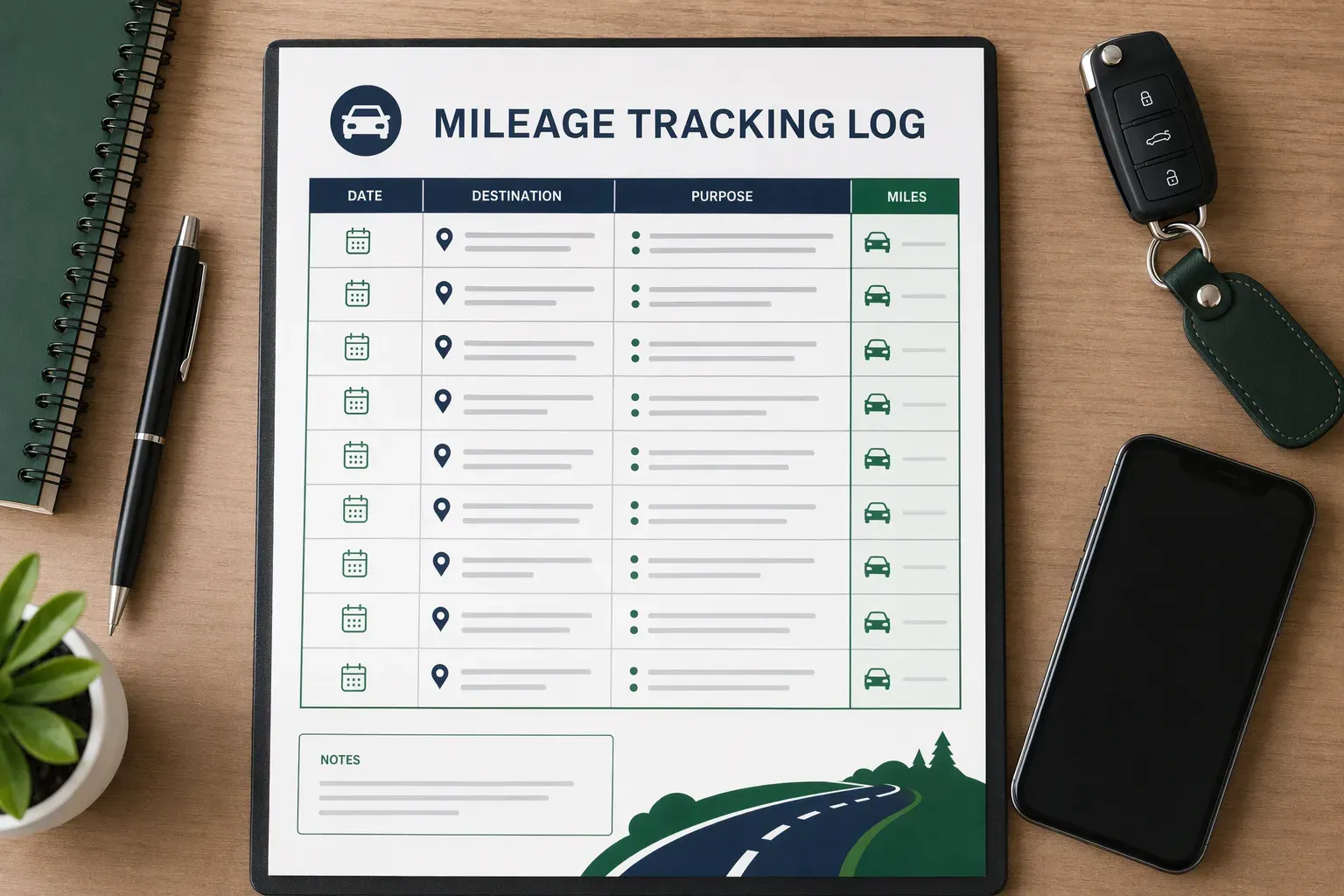
As an independent travel agent, you can deduct the miles you drive for business purposes, but only if you keep proper records. The IRS requires you to log each trip's date, destination, business purpose, and miles driven—tracked as the trips happen, not reconstructed in April. Keep these records for at least three years after you file, and you'll have what you need to claim the deduction on Schedule C.
What counts as business miles for travel agents
A business mile is any mile you drive for an ordinary, necessary business purpose, as defined in IRS Publication 463. For independent travel agents, these trips add up quickly:
- Client meetings: Driving to meet a client at a coffee shop, their home, or their office to discuss a trip
- Supplier visits: Going to a hotel, cruise line office, or tourism board to meet with representatives or attend a site inspection
- Networking events: Attending a local travel advisor meetup, industry lunch, or chamber of commerce gathering
- Business errands: Trips to the bank to deposit client checks, the post office to mail documents, or an office supply store for business materials
- Continuing education: Driving to a training session, certification course, or industry conference in your area
- Fam trip departures: The drive to the airport when you're traveling on a business trip (but not when you're traveling for personal reasons)
The key test is whether the trip serves a business purpose. If you drove there to serve a client, meet a supplier, learn something for your business, or handle a business task, it's a business mile.
What doesn't count
Not every mile you drive is deductible, even if you work from home. Here's what stays off your log:
Commuting between home and your regular place of business is personal mileage. If you drive to a coworking space or an office you use daily, that's commuting. The IRS is clear on this point in Topic 510: commuting miles don't count, even when you're self-employed.
Personal errands mixed into a business trip only count for the business portion. Say you drive ten miles to meet a client, then another five miles to pick up groceries on the way home. Log the ten business miles. The grocery stop is personal, so those five miles stay off the log.
Driving to the airport for a personal vacation isn't business mileage, even if you're a travel agent. The purpose of the trip determines whether it counts, not the fact that you work in travel.
If a single trip serves both business and personal purposes—like visiting a supplier and then stopping at a friend's house—only the business portion is deductible. When in doubt, ask whether you would have made the trip if you weren't running your business.
What records the IRS expects
The IRS requires contemporaneous records for vehicle expenses, meaning you log trips as they happen rather than trying to piece them together from a calendar later. IRS Publication 463 and Schedule C, Part IV, ask for four pieces of information for every business trip:
- Date of the trip
- Destination (starting point and where you went)
- Business purpose (who you met and why, or what business task you completed)
- Miles driven
It also helps to note your odometer reading at the start and end of the year, which gives you total annual miles at a glance. The IRS uses that number to check that your business miles make sense against your overall driving.
Here's what a simple log entry looks like:
- Date: March 12, 2026
- Destination: Home to Marriott Downtown, 1234 Main St
- Purpose: Site inspection meeting with sales manager for June group booking
- Miles: 18 miles round trip
The more specific your business purpose, the better. "Client meeting" is fine, but "Met Sarah Johnson to plan Italy honeymoon, reviewed hotel options" is clearer. You don't need a novel, but a few extra words now save questions later.
How to track mileage without year-end stress
The best system is the one you'll actually use. Here are the most common methods independent travel agents rely on:
Mileage tracking apps
Apps like MileIQ, QuickBooks Mileage Tracker, Everlance, and others use GPS to log trips automatically. You review each trip and swipe to mark it as business or personal. The app calculates the mileage and keeps a running total.
Pros: Automatic tracking means you won't forget a trip. The app does the math and stores the records digitally.
Cons: GPS tracking drains your phone battery, and you need to remember to categorize trips regularly so they don't pile up. Most apps charge a monthly or annual fee.
Spreadsheet or notebook
A simple spreadsheet or paper logbook works if you prefer to log trips manually. Add a row for each trip with the four required details. At year-end, total the miles and multiply by the standard mileage rate.
Pros: No subscription cost. You control the format and can customize it however you like.
Cons: It's easy to forget to log a trip when you're busy, and manual entry takes more time. You'll need to keep the spreadsheet or notebook for at least three years.
Trip-tracking tools with mileage built in
Some tools designed for travel agents include mileage tracking alongside trip records and expense logging. If you're already tracking where you went and why, the mileage can sit in the same record.
Pros: Everything is in one place: the client name, the trip purpose, the date, and the mileage. You're less likely to forget a trip because you're already logging the business activity.
Cons: Fewer options available compared to general mileage apps.
Whichever method you choose, log trips the same day or as close to it as possible. A log filled out in real time is what holds up if the IRS ever asks to see your records.
The standard mileage rate for 2026
For 2026, the IRS standard mileage rate changed mid-year, so you'll need to split your miles into two periods when you calculate your deduction:
- January 1 to June 30, 2026: 72.5 cents per mile
- July 1 to December 31, 2026: 76 cents per mile
To figure your deduction, add up your business miles for the first half of the year, multiply by 72.5 cents, then do the same for the second half at 76 cents. Add the two amounts together for your total mileage deduction, which you'll report on Schedule C.
The IRS publishes the standard mileage rate each year (and sometimes adjusts it mid-year, as it did in 2026). You can find the current rate on the IRS website under "Standard mileage rates."
There's an alternative method called the actual expense method, where you deduct the business-use percentage of your car's real operating costs: gas, oil, insurance, repairs, registration, and depreciation. That method requires more record-keeping—you'll need receipts for every car expense—and there's an important timing rule. If you want to use the standard mileage rate for a car, you generally have to choose it in the first year you use that car for business. The full rules are in IRS Publication 463.
For most independent travel agents, the standard mileage rate is simpler and covers vehicle costs without tracking every gas receipt.
Common mistakes travel agents make with mileage
The biggest mistake is under-tracking. Many travel agents only log the miles to and from the airport when they're on a fam trip or attending a conference. They miss the local business miles: the drive to meet a client at their office, the trip to the bank, the stop at the hotel for a site visit, the evening drive to a networking event.
Those short local trips add up. If you meet three clients a week at ten miles round trip each, that's 30 miles a week, 120 miles a month, and over 1,400 miles a year. At the 2026 rate, that's around $1,000 in deductions you'd lose by not logging them.
Another common mistake is waiting until tax time to put together a mileage log. The IRS expects contemporaneous records, and an auditor can tell the difference between a log kept all year and one that was filled in from memory in March. If you don't have written records made at or near the time of each trip, the IRS can disallow the deduction.
A third mistake is mixing personal and business miles without separating them. If you stop for groceries on the way home from a client meeting, only log the miles to and from the client. The side trip is personal. If your log includes every mile you drove and you marked all of it as business, that's a problem.
Finally, some agents forget to keep their logs after they file. The IRS can examine a return for up to three years after you file it (longer in some cases), so keep your mileage records for at least that long. A digital log or scanned notebook makes storage easy.
A tool designed for travel agent records
AgentWriteOff is a trip-tracking and expense tool built for independent travel agents. It helps you organize business trip details, log expenses, and track mileage in one place, with AI-powered guidance on what records matter for taxes. When you log a trip, the mileage sits alongside the client name and the business purpose, so nothing gets lost. Learn more at agentwriteoff.com.
Work with your tax professional
This article covers what the IRS expects for mileage records, but it's not tax advice for your specific situation. Every agent's business is different, and state rules can add their own requirements. Work with a CPA or enrolled agent who understands self-employment and can review your records to make sure you're claiming everything you're entitled to—and nothing you're not.
Keep your mileage log up to date, track trips as they happen, and you'll have one less thing to worry about when tax season arrives.