Startup Costs and First-Year Deductions for New Travel Agents
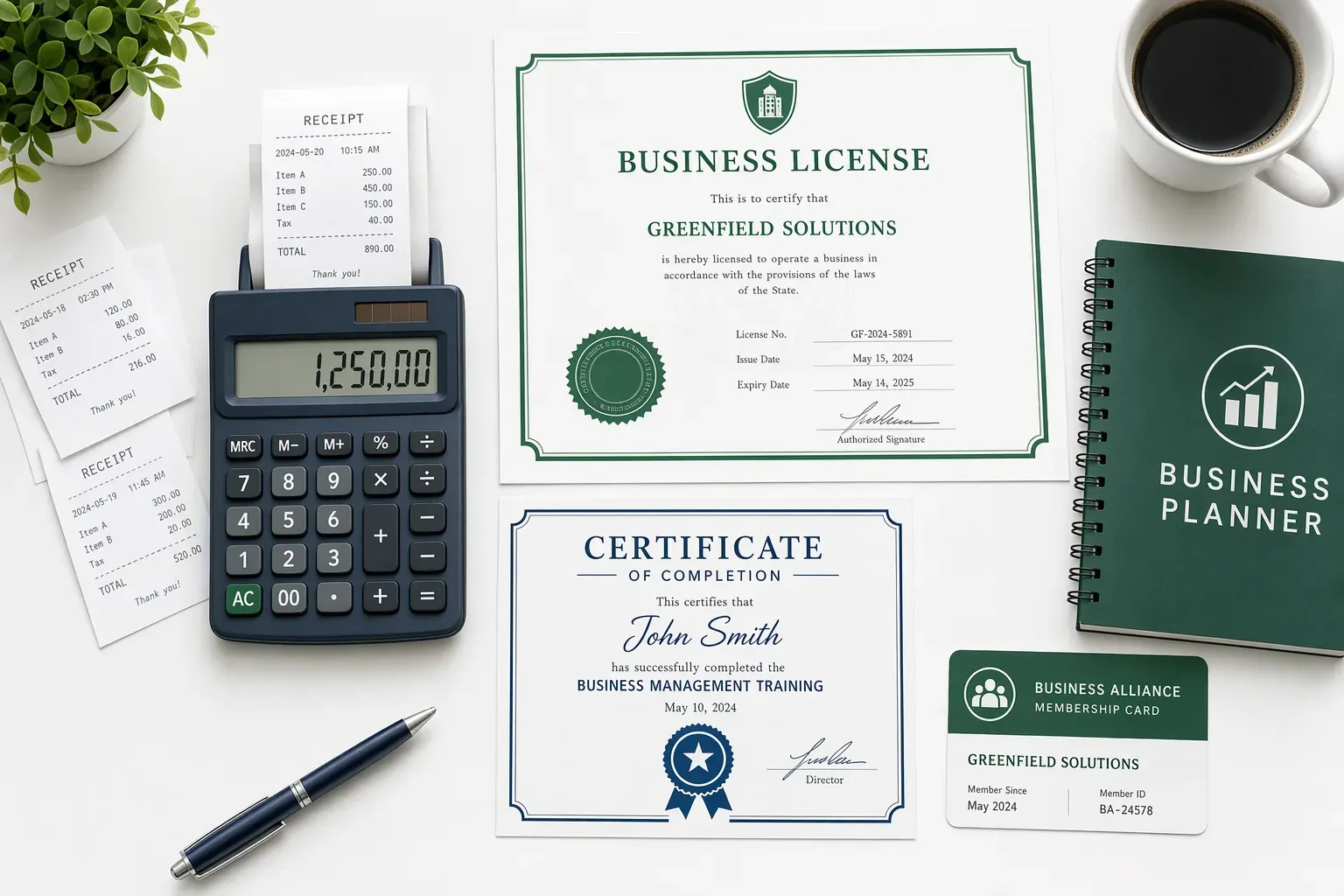
New independent travel agents can deduct up to $5,000 of startup costs in their first year of business, even if they haven't earned their first commission yet. Any costs beyond $5,000 are amortized over 15 years. The deduction is claimed on Form 4562 and doesn't require profitable operations—it covers legitimate business expenses incurred before you're ready to accept clients.
What counts as a startup cost
Startup costs are expenses you incur before your business begins active operations. The IRS defines three categories: investigating the business (researching host agencies, evaluating suppliers, talking to working agents), creating the business (business licenses, initial legal or accounting fees, host agency setup fees), and pre-opening activities (advertising your launch, training courses before your first client, ordering business cards).
The expense must be something that would be deductible if your business were already running. If established agents deduct a type of cost as a business expense, it qualifies as a startup cost when incurred before your business begins.
The $5,000 first-year deduction
Say you spent $6,800 on startup costs before launching as an independent travel agent in 2026: a $395 host agency enrollment fee, $450 for IATA and CLIA memberships, $1,200 for a website setup, $800 for initial training courses, $300 for business cards and brochures, $200 for a business license, and $3,455 for three months of accounting software, marketing expenses, and research before you felt ready to take clients.
You can deduct $5,000 of that in 2026. The remaining $1,800 is amortized over 180 months, giving you a $10 monthly deduction ($1,800 ÷ 180) starting the month your business begins. If your business started in July 2026, you get six months of amortization in 2026 ($60), making your total first-year deduction $5,060.
The $5,000 limit is reduced dollar-for-dollar if your total startup costs exceed $50,000—if you spent $52,000, you'd deduct $3,000 in year one—but most travel agents' startup costs stay well under this threshold.
What doesn't qualify as a startup cost
Organizational costs for forming an LLC or corporation (state filing fees, legal fees to draft articles of incorporation) have their own separate $5,000 first-year deduction under Section 248. Don't mix them with startup costs—track them separately.
Interest, taxes, and research expenses under Section 174 also don't qualify as startup costs. Neither does inventory, though few travel agents carry inventory.
When your business begins
Your business begins when you're ready to accept clients and start generating income, not when you earn your first commission. If you completed your training, joined a host agency, set up your website, and started advertising in June, your business began in June even if your first commission check didn't arrive until September.
The IRS looks at when you were open for business, not when you became profitable. A new agent with no sales in the first few months still has an active business if they're marketing, taking inquiries, and ready to book trips.
How to claim startup cost deductions
The election to deduct startup costs is automatic—you don't need to file a separate form to opt in. Report your startup costs on Form 4562, Part VI. If you're e-filing, your tax software will walk you through it when you indicate you had first-year startup expenses.
If you don't want the deduction in year one (rare, but possible if you expect much higher income in future years), you can elect out by attaching a statement to your return. Most new agents take the deduction immediately.
Common travel agent startup costs
Host agency enrollment fees typically range from $0 to $795 and are fully deductible as startup costs. IATA, CLIA, ASTA, and other industry memberships—first-year fees of $300 to $600 combined—also qualify. Website setup (domain, hosting, design) often runs $500 to $2,000. Training courses before your first client can be $400 to $1,500. Business cards, brochures, and initial marketing materials usually cost $200 to $600. Business licenses vary by city but are typically under $200.
Track these expenses as you incur them, noting the date, amount, vendor, and category. You'll need this documentation if the IRS ever asks, and it makes preparing your first tax return straightforward.
If you're tracking startup expenses alongside active business costs, AgentWriteOff organizes trip records and ongoing deductions with tax guidance for independent agents.