Travel Agent Tax Deductions: What You Can Write Off
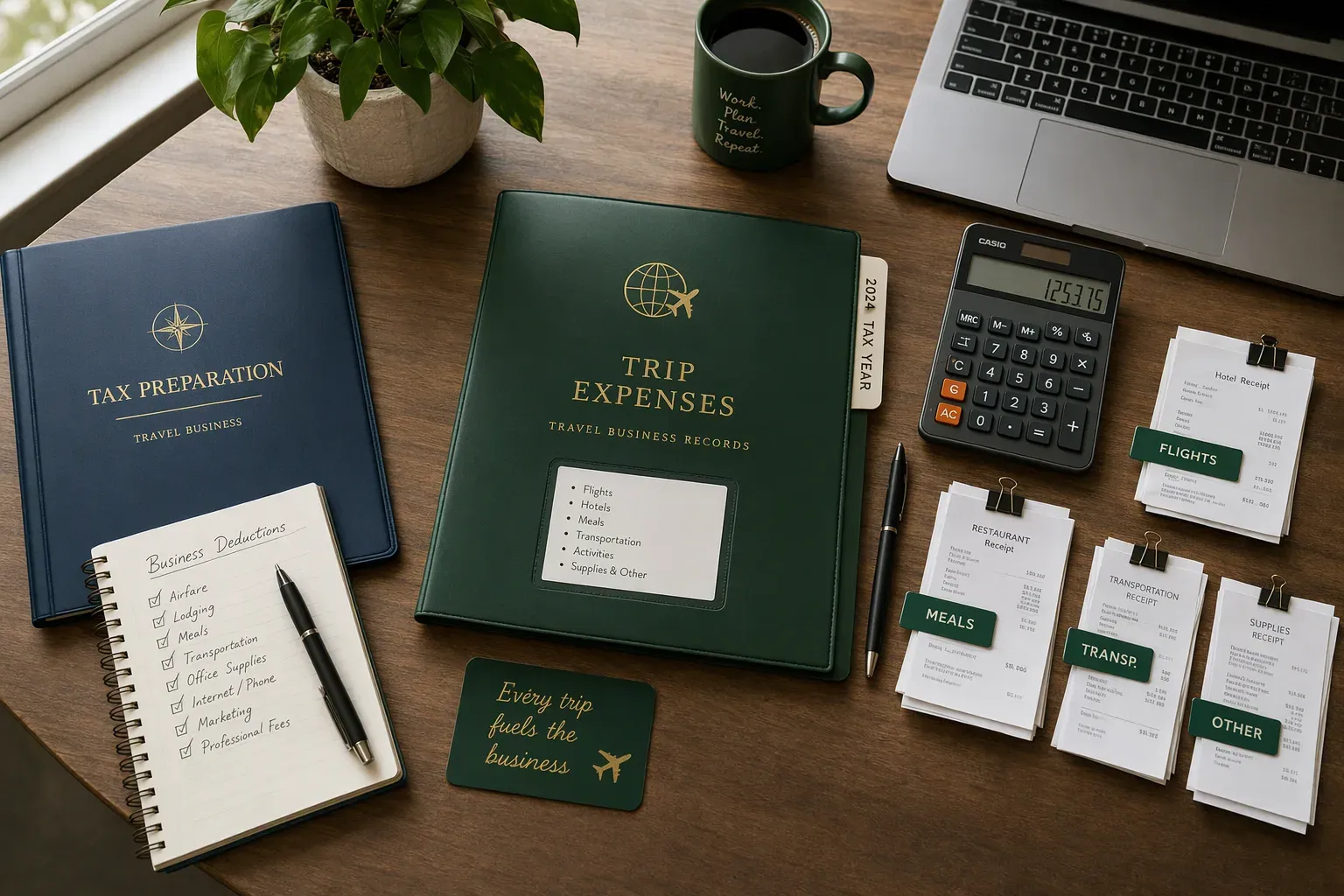
As an independent travel agent, you can deduct ordinary and necessary business expenses on Schedule C, reducing your taxable income. The key categories include home office costs, office supplies, software subscriptions, marketing expenses, professional memberships, continuing education, and the business portion of travel. Each expense needs to serve a genuine business purpose, and you'll need receipts, records, and documentation that show what you spent, when, and why.
What makes an expense deductible
The IRS uses a two-part test: an expense must be both ordinary and necessary for your trade or business. "Ordinary" means common and accepted in the travel industry. "Necessary" means helpful and appropriate for your business, though not strictly required to operate.
For independent travel agents, this means:
- Ordinary: Other travel agents in your situation typically incur this type of expense. Marketing your services, subscribing to a GDS or CRM, attending industry conferences, and meeting clients are all ordinary in the travel business.
- Necessary: The expense helps you serve clients, generate bookings, stay current with industry changes, or manage your business operations.
The expense also has to be for business, not personal use. If something serves both purposes—like a phone you use for client calls and personal calls—you can deduct the business portion. If it's entirely personal, it stays off your Schedule C, even if it happened during a business trip.
Common deductible expenses for independent travel agents
Here are the categories most independent travel agents claim, with examples of what fits in each:
Home office
If you work from home and use a specific area regularly and exclusively for business, you can deduct a portion of your home costs. The IRS offers two methods:
- Simplified method: $5 per square foot of office space, up to 300 square feet (maximum $1,500 deduction)
- Actual expense method: The business-use percentage of your mortgage interest or rent, utilities, insurance, repairs, and depreciation
The exclusive-use rule is strict. If the spare bedroom is your office during the day and a guest room at night, it doesn't qualify. If it's only your office, it does. The area needs to be your principal place of business or where you regularly meet clients.
Office supplies and equipment
Pens, paper, printer ink, file folders, postage, business cards, a desk, a chair, a computer, a monitor, and a printer all count when you use them for business. Smaller items you use up in a year are fully deductible. Equipment that lasts longer than a year—like a laptop or a filing cabinet—is depreciated over its useful life or, in many cases, deducted all at once under Section 179.
Software and subscriptions
The tools you use to run your business are deductible:
- CRM and booking tools: Clientbase, Travefy, TravelJoy, or similar platforms
- GDS access fees: Sabre, Amadeus, or Apollo subscription costs
- Marketing platforms: Mailchimp, Constant Contact, Canva Pro, or social media scheduling tools
- Accounting software: QuickBooks, FreshBooks, or other bookkeeping systems
- Cloud storage: Dropbox, Google Workspace, or Microsoft 365 when used for business files
- Industry resources: subscription to Travel Market Report, Travel Weekly, or supplier training portals
If you use a subscription for both business and personal purposes, deduct the portion you use for business.
Marketing and advertising
Any cost to promote your business and attract clients is deductible:
- Online ads: Facebook, Instagram, or Google Ads targeted at potential clients
- Website costs: domain registration, hosting, design, and maintenance
- Print materials: brochures, flyers, postcards, or mailers
- Networking events: the cost to attend a local business mixer or chamber of commerce event (the registration fee, not the meals—those fall under a different rule)
- Sponsorships: sponsoring a local event or charity fundraiser to get your name out
Professional development and education
Courses, certifications, and training that maintain or improve your skills in the travel business are deductible. This includes:
- Certifications: Certified Travel Associate (CTA), Certified Travel Counselor (CTC), or destination specialist programs
- Conferences and industry events: registration fees for Travel Weekly events, host agency conferences, or supplier summits
- Webinars and online courses: training on marketing, sales, GDS systems, or new destinations
- Books and subscriptions: industry publications or business books related to running your agency
The education must relate to your current business. If you're taking a course to enter a completely new field, that's not deductible.
Professional memberships and fees
Dues and membership fees for trade organizations count as business expenses:
- Host agency fees: monthly or annual fees to your host agency (if you're an independent contractor with one)
- Trade associations: American Society of Travel Advisors (ASTA), Signature Travel Network, Virtuoso, Travel Leaders Network, or similar organizations
- Local business groups: chamber of commerce or local business networking group memberships
Meals with clients and suppliers
You can deduct 50% of the cost of business meals where you're present and there's a clear business purpose. The IRS tightened the rules in recent years, so the meal needs to be with a client, potential client, supplier, or business associate—not just meals you eat while working.
Examples that count:
- Taking a client to lunch to discuss their upcoming trip
- Meeting a hotel sales manager for coffee to learn about a new property
- Dinner with a supplier representative who's in town for a site visit
What doesn't count:
- Lunch at your desk while you answer emails
- Grabbing coffee on your way to a client meeting (no one else present)
Keep the receipt and note who you met and what you discussed. The 50% limit applies to most business meals. For the 2026 tax year, there are no special exceptions beyond that unless Congress passes new legislation.
Travel expenses
When you travel for business, the costs are deductible. For independent travel agents, business travel typically includes:
- Fam trips: airfare, hotels, meals (50%), and other costs for familiarization trips where the purpose is learning about destinations, properties, or experiences to sell to clients
- Conferences and training: travel to and from an industry conference, the hotel, and meals while you're there
- Site inspections: visiting a resort, cruise ship, or destination to evaluate it for clients
The IRS looks at the primary purpose of the trip. If it's business, your travel costs are deductible, even if you spend a little time sightseeing. If it's mostly vacation with a few business meetings tacked on, only the business portion is deductible.
For fam trips, the business-purpose test is key. If the tour operator or supplier structures the trip so you're learning about their offerings, meeting other travel professionals, and gathering information to sell trips, that's business. If it's more like a free vacation, the IRS may see it differently.
Document the business purpose: save the invitation, the itinerary, your notes from site inspections, and any materials the supplier provided. If you extend the trip for personal reasons—say, you stay three extra days to relax after a conference—only the business portion of the airfare and the first few nights' hotel are deductible. The personal days aren't.
Business insurance
Premiums for insurance related to your business are deductible:
- Errors and omissions (E&O) insurance: coverage in case a client claims you made a mistake in a booking
- General liability insurance: if you carry it for your business
- Business property insurance: if you insure equipment or inventory
Health insurance works differently. If you're self-employed, pay for your own health insurance, and show a net profit for the year, you can deduct premiums on Form 1040 (the self-employed health insurance deduction), not on Schedule C.
Phone and internet
If you use your phone or internet connection for business, you can deduct the business portion. Many independent travel agents use their personal cell phone and home internet for client calls, emails, and research. Estimate the percentage you use for business and deduct that share.
Say your internet bill is $80 a month and you use it for business about 60% of the time. You'd deduct $48 a month, or $576 a year.
Bank fees and credit card interest
Fees for a business bank account, credit card processing fees for client payments, and interest on a business credit card are deductible. Personal credit card interest isn't, even if you occasionally charge business expenses to that card.
Professional services
Fees you pay to run or improve your business are deductible:
- Accounting and bookkeeping: a CPA who prepares your tax return or a bookkeeper who keeps your records straight
- Legal fees: an attorney who reviews a contract or helps with a business matter
- Business consulting: a coach or consultant who advises you on marketing, sales, or operations
What doesn't qualify
Not every expense related to your life as a travel agent is deductible. Here's what stays off Schedule C:
Personal travel: A vacation is a vacation, even if you happen to work in travel. If you take your family to Disney and it's not part of a fam trip or supplier event, the costs are personal.
Clothing: Unless it's a uniform or protective gear you wouldn't wear outside work, clothing isn't deductible. Business attire—suits, dresses, shoes—doesn't count, even if you only wear it to meet clients.
Commuting: As covered in How to Track Business Miles as a Travel Agent, the drive from home to your regular place of business is personal mileage. If you work from home, there's no commute. If you go to a coworking space every day, that drive isn't deductible.
Meals alone: Stopping for lunch while you're working doesn't make the meal a business expense. Meals are deductible when you're meeting someone for a business purpose, not when you're eating by yourself.
Personal portion of mixed-use expenses: If you use something for both business and personal reasons, only the business share is deductible. The other half of your phone bill, the vacation days tacked onto a business trip, the groceries you bought on the way home from a client meeting—none of that goes on Schedule C.
What records the IRS expects
The IRS wants proof of what you spent, when, and why. Here's what to keep for each expense:
Receipts: A record of the amount, the date, and what you bought. For expenses under $75, the IRS is more lenient, but it's still smart to keep a record. For anything over $75, a receipt is required.
Purpose documentation: A note explaining the business reason for the expense. On the receipt or in your records, write who you met, what you discussed, or what business task the expense supported.
Credit card and bank statements: Statements show you spent the money, but they don't show the business purpose. You need both.
Contemporaneous records: Made at or near the time of the expense. A notebook entry the day you paid for something is contemporaneous. A spreadsheet you fill out ten months later from memory isn't.
The IRS can examine your return for three years after you file (longer in some cases), so keep your records for at least that long. Digital records—scanned receipts, photos, or accounting software entries—are fine as long as they're clear and complete.
Common mistakes independent travel agents make
The first mistake is mixing business and personal expenses without separating them. If you use one credit card for everything and claim it all as business, that's a problem. If you take a trip that's part business and part vacation and deduct the whole cost, the IRS will adjust it if they look.
The second mistake is under-documenting. A line in your bank statement that says "Amazon $43.17" doesn't tell the IRS what you bought or why it was for business. If you don't have a receipt and a note about the business purpose, the deduction can be disallowed.
A third mistake is not deducting legitimate expenses because they seem small or you're not sure. Office supplies, software subscriptions, professional memberships, and the business share of your phone bill all add up. Over a year, these can be hundreds or thousands of dollars in deductions you're entitled to claim.
A fourth mistake is claiming personal expenses as business costs because "it's related to travel." Your own vacation isn't a business expense. Your spouse's airfare on a fam trip isn't deductible unless they're also a bona fide employee of your business and there's a business reason for them to be there.
Finally, some agents don't keep records long enough. The IRS can audit a return for three years, so keep receipts, logs, and documentation for at least that long after you file.
A tool designed for travel agent records
AgentWriteOff helps independent travel agents organize trip details and expenses in one place, with AI-powered guidance on what records matter for taxes. It's built to track the work you do—client trips, fam trips, supplier meetings—and log the expenses alongside them, so you're not piecing everything together later. Learn more at agentwriteoff.com.
Work with your tax professional
This article covers common deductions for independent travel agents, but it's not tax advice for your specific situation. Every agent's business is different. Some work as employees and use Form 2106 (if their employer allows unreimbursed expenses); most independent agents file Schedule C. Some are in states with their own deduction rules.
Work with a CPA, enrolled agent, or tax professional who understands self-employment. They'll review your records, make sure you're claiming what you're entitled to, and help you avoid mistakes that could trigger an audit or cost you money. Keep your records organized, document the business purpose, and you'll have what you need when it's time to file.